

Cast Iron vs Wrought Iron: Key Differences Explained
Affiliate links — we may earn a commission
Have you ever seen an old iron fence and thought about its history? These metalworks are more than just barriers. They are historical artifacts that show human creativity. Knowing the difference between cast iron and wrought iron helps us appreciate their craftsmanship.
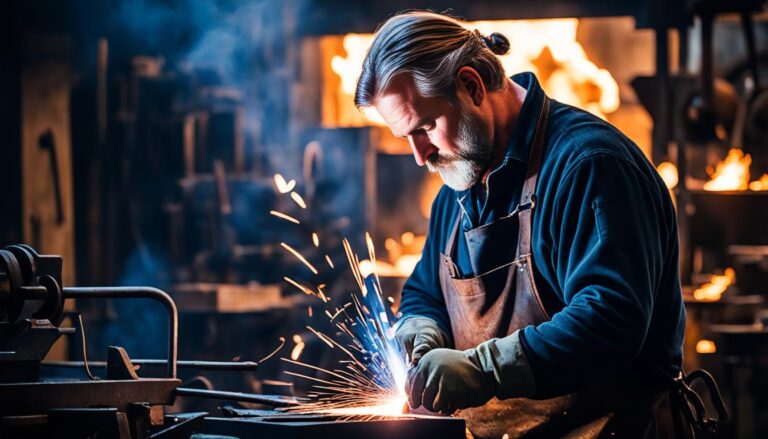
Picture the 19th century artists and blacksmiths making wrought iron gates. These gates could last for many years. Wrought iron has less than 0.08% carbon and 1% to 2% slag. It is known for being strong and flexible12. Cast iron, with 2% to 4% carbon, is strong but can break easily. It’s also cheaper to make because it’s easier to cast13.
Key Takeaways
- Wrought iron is stronger and more durable than cast iron because of its structure and how it’s made.
- Cast iron is cheaper because it’s easier to make but it can break easily1.
- Wrought iron fences can last for over a hundred years2.
- Both types of iron can be recycled, which helps the environment1.
- Knowing the differences between cast iron and wrought iron helps in picking the right material for projects.
Introduction to Cast Iron and Wrought Iron
Cast iron and wrought iron are key types of iron used in building and industry for a long time. It’s important to know how they differ to understand their roles and what makes them special.
Pure iron is 100% iron4. Cast iron has been crucial in building history because it’s strong and easy to make. It has 3 to 5% carbon, plus some magnesium and silicon4.
Wrought iron is known for its special features and history. It has less than 0.8% carbon and has a unique grainy look from slag inclusions5. Making wrought iron is harder than making cast iron, showing a big difference in how they’re made6.
Cast iron is great for building because it’s strong. Wrought iron was perfect for decorations and tools back then6. These materials have different uses because of their unique traits. The shift from wrought iron to steel shows how iron making has changed over time5.
In short, cast iron and wrought iron have their own special qualities that have influenced their use in history and today. Their various uses show how iron making has evolved over the years. This sets the stage for a closer look at the properties of cast and wrought iron.
Iron Manufacturing Processes
The iron manufacturing processes show the unique traits of cast iron and wrought iron. These processes help us understand their benefits and uses. We’ll look into how cast iron and wrought iron are made.
Cast Iron Manufacturing Process
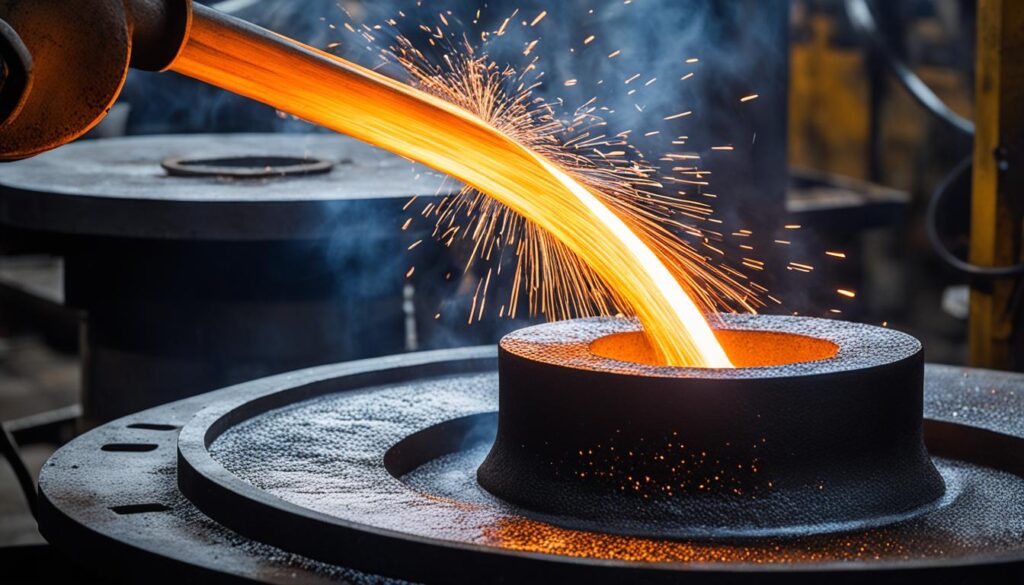
Cast iron is made by smelting iron ore with other alloys and pouring it into molds. This mix has 2-4% carbon, 1-3% silicone, and about 0.5% manganese7. The high carbon makes cast iron hard but also brittle, with a hardness like stainless steel, around 86 Rockwell7.
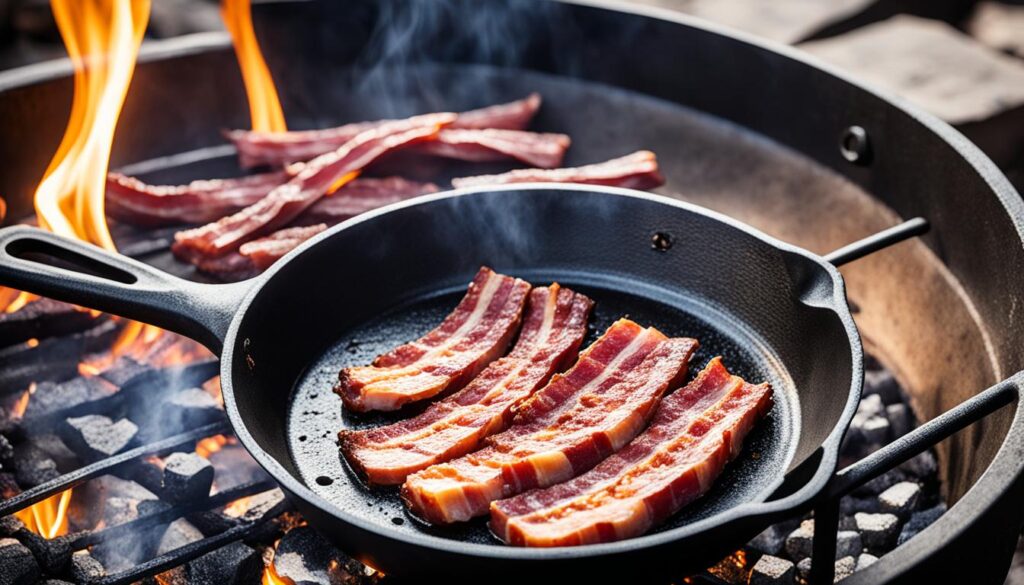
Cast iron is great for making cookware, car parts, pipes, and machinery because it’s affordable, strong under pressure, and resists wear well8.
Wrought Iron Manufacturing Process
Wrought iron is made by heating and shaping the iron with tools over and over. It has about 0.1% carbon and 0.25% impurities like sulfur and phosphorus7. This low carbon makes it softer and easier to shape8.
It also has about 2% slag, which helps make it tough and gives it a fibrous structure7. Wrought iron is more flexible, allowing it to be shaped into different forms. It’s also strong in tension, with a strength similar to modern steel7.
| Characteristic | Cast Iron | Wrought Iron |
|---|---|---|
| Carbon Content | 2-4% | 0.1% |
| Silicone Content | 1-3% | 0.25% |
| Manganese Content | 0.5% | 0.25% |
| Hardness | 86 Rockwell | Softer |
| Tensile Strength | — (Hard) | 300MPa |
What is the Difference Between Cast Iron and Wrought Iron
Knowing the difference between cast iron and wrought iron is key to picking the right one for a job. These materials have different physical and chemical makeups. This affects their strength and how they are used.
Physical Properties
Cast iron and wrought iron are not the same when you look at their physical traits. Cast iron has 2-4% carbon, making it stiff and hard to bend. Wrought iron, with about 0.25% carbon, is softer and easier to shape89. Cast iron is also tougher and keeps its shape well under stress8.
Cast iron is great for things that need to be strong and keep their shape. Wrought iron, on the other hand, can be shaped easily and gets stronger when worked on8. It has little carbon and some slag from smelting, making it flexible and strong10.
Chemical Composition
Cast iron and wrought iron are different in what they are made of. Cast iron has more than 2% carbon and other elements like manganese and silicon10. This makes it hard but can break easily. It’s best for things that need to be strong under pressure.
Wrought iron has very little carbon and some slag, making it flexible and strong10. The slag helps it stay strong even when shaped many times. This makes wrought iron great for things like fences and gates that need to be strong and flexible8.
In short, knowing the differences between cast iron and wrought iron helps in making better choices for projects. Their unique qualities make them suitable for different uses, improving their effectiveness and lasting power.
Cast Iron Properties and Applications
Cast iron is known for its many useful properties. It has 2-4% carbon and also silicon and manganese. These elements make it special7. Cast iron is great for many reasons, like being easy to cast, strong, and easy to work with8.
It doesn’t wear out easily and doesn’t change size much when heated. This makes it perfect for things like engine blocks. It keeps heat well and is easy to shape, which is great for many industries7. Cast iron’s benefits help in making cars, buildings, and other products11.
Properties of Cast Iron
Cast iron has 2-4% carbon, 1-3% silicon, and about 0.5% manganese7. This mix of elements gives it high strength and stiffness11. It also helps it reduce vibrations, making it useful for machines and tools8.
For example, brake rotors made of cast iron don’t warp easily. This is because it’s strong and doesn’t change size much when hot. It’s also easy to make, which saves money and time8.
Applications of Cast Iron
Cast iron is used in many areas. You can find it in cookware, pipes, car parts, and even ship anchors. Its many good points make it popular8. It’s perfect for heavy jobs like engine blocks because it’s strong. Brake rotors last longer because it resists wear well7.
Cast iron is also a smart choice for making car parts because it’s easy and cheap to work with7. In the industrial world, cast iron pipes are chosen for their strength and dependability8.
| Property | Value/Range | Notes |
|---|---|---|
| Carbon Content | 2-4% | Provides high strength and rigidity7 |
| Silicon Content | 1-3% | Enhances machinability7 |
| Manganese Content | ~0.5% | Improves casting ability7 |
| Applications | Various | Including cookware, automotive parts, machinery8 |
| Compression Strength | High | Suitable for heavy-duty use8 |
| Machinability | Excellent | Economical for manufacturing8 |
Wrought Iron Properties and Applications
Wrought iron is known for its unique properties and wide range of uses. It’s a favorite for both building structures and adding beauty. Let’s explore what makes wrought iron special and how it’s used.
Properties of Wrought Iron
Wrought iron is famous for its strength and flexibility. This comes from a special way of making it that lines up its atoms12. It has a bit of carbon, some impurities, and a small amount of slag7. These elements give it a strength similar to modern steel7.
It’s also very flexible, which lets it be shaped into complex designs12. Wrought iron is great for welding and doesn’t easily break down, making it perfect for things like bridges and buildings7.
Applications of Wrought Iron
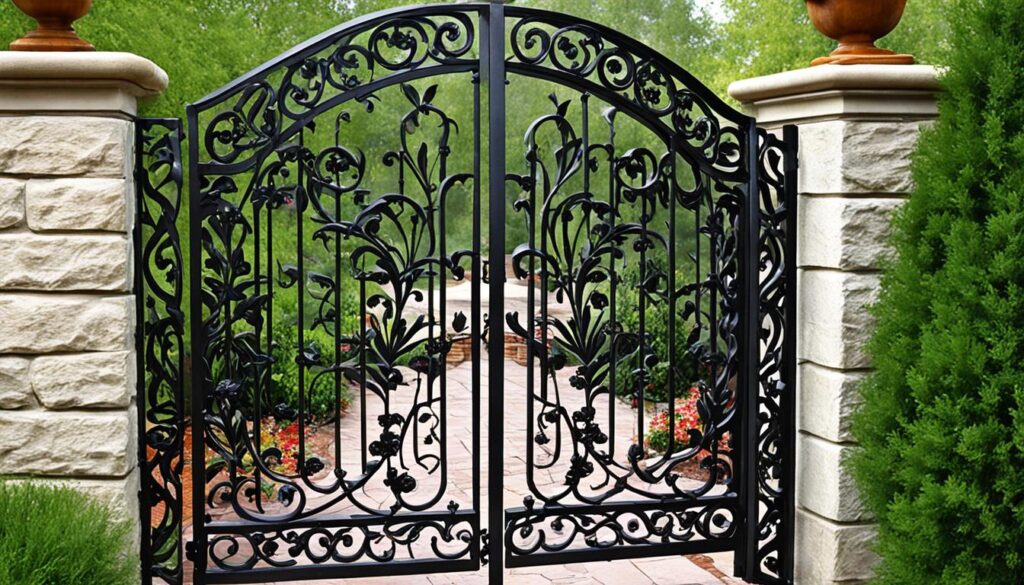
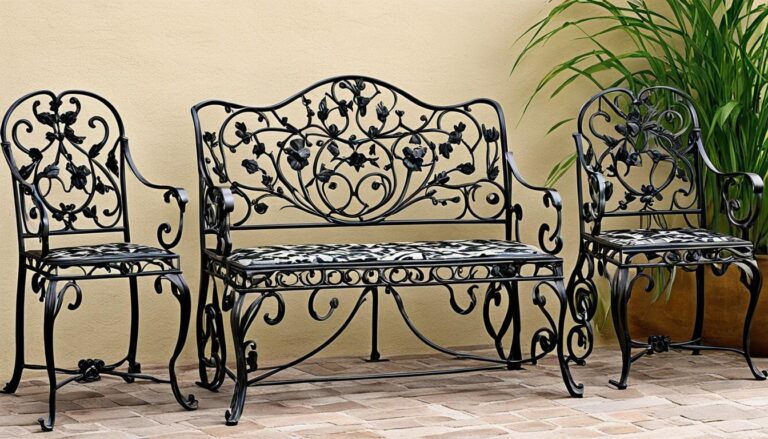
Wrought iron has many uses because of its strength and beauty. It’s often used for things like fancy gates, fences, and furniture12. It’s also great for outdoor items like trellises and balcony railings because it lasts long with little upkeep12.
Wrought iron is also used in locks and hinges, adding both strength and beauty to buildings12. Its versatility means it can be made to fit any design or function, making it valuable for homes and businesses.
Durability and Maintenance
Cast and wrought iron are both known for their long-lasting qualities. Yet, they differ in how long they last and what care they need. Knowing these differences helps us keep these materials in top shape over time.
Durability Factors
Wrought iron stands out for its low carbon content, making it bendable and resistant to corrosion1314. It’s strong enough to handle heavy loads and weather, perfect for things like gates and balustrades14. Cast iron, with more carbon, is also strong but can be brittle and rust easily1314. Still, with the right care, cast iron can last a long time, especially for heavy items like furniture.
Maintenance Requirements
Looking after wrought iron means checking for rust and using paint or wax to protect it from moisture and air14. These irons are made to order and cost more but need little upkeep, lasting for many years13. They can stand up to the weather and last for generations with just a little care14. Cast iron, however, needs regular painting or sealing to stop rust, especially in damp places2. Both types of iron do best with regular cleaning and staying out of harsh weather to keep them looking good and lasting long.
| Iron Type | Durability Factors | Maintenance Requirements |
|---|---|---|
| Wrought Iron |
– Low carbon content1314 – High tensile strength14 – Customizable and malleable2 – Corrosion-resistant14 |
– Regular inspections for rust14 – Apply protective coatings14 – Low maintenance requirements14 |
| Cast Iron |
– High carbon content13 – Strong but brittle13 – Heavy and solid appearance13 – Prone to rust without protection142 |
– Regular painting or sealing2 – Protect against moisture14 – More frequent maintenance2 |
Conclusion
In this detailed look at cast iron vs wrought iron, we’ve explored their differences. We talked about their unique features, how they’re made, and where they’re used. Cast iron is great for slow cooking because it can get very hot. Wrought iron, on the other hand, has been used in building since the 1880s15.
These materials differ a lot in how much carbon they have. Wrought iron has very little carbon, which makes it easy to shape and work with15. Cast iron, with more carbon, is very strong and perfect for cooking tools that get very hot16. When picking between cast and wrought iron, think about what you need it for. Cast iron is good for cooking over open flames, while wrought iron is better for decoration and building.
Cast iron also looks great and comes in many shapes like waffle irons and Dutch ovens16. Wrought iron’s use dropped in the 1960s as low-carbon steel became more popular for building and industry15. Knowing these differences helps you pick the right iron for your needs, whether for cooking, building, or art.
What is the difference between cast iron and wrought iron?
How is cast iron made?
How is wrought iron made?
What are the physical properties of cast iron?
What are the chemical properties of wrought iron?
What are common applications of cast iron?
What are common applications of wrought iron?
How durable is cast iron?
What maintenance does wrought iron require?
Source Links
- Cast Iron vs. Wrought Iron Fencing: What’s the Difference? – Garon Fence – https://www.garonfence.com/blog/cast-iron-vs-wrought-iron/
- Cast Iron Vs Wrought Iron – Northland Fence – https://www.northlandfence.com/cast-iron-vs-wrought-iron/
- What are the differences between iron and steel? – https://www.essentracomponents.com/en-us/news/solutions/access-hardware/what-are-the-differences-between-iron-and-steel
- Difference Between Steel, Cast Iron and Wrought Iron – https://titussteel.com/difference-between-steel-cast-iron-and-wrought-iron/
- difference wrought iron cast iron – https://www.gardencityironandmetal.com/blog/tag/difference-wrought-iron-cast-iron/
- What’s the difference between wrought iron and cast iron? – https://prcno.org/whats-difference-wrought-iron-cast-iron/
- Wrought vs Cast Iron: What is The Difference? | Metal Supermarkets – https://www.metalsupermarkets.com/wrought-vs-cast-iron-what-is-the-difference/
- Industrial Metal Supply Company – https://www.industrialmetalsupply.com/blog/difference-between-cast-and-wrought-iron
- How to Identify if It’s Wrought Iron | Universal Iron Doors – https://www.iwantthatdoor.com/how-to-identify-if-its-wrought-iron/
- Wrought Iron vs Cast Iron: The Clash of the Metal Alloys – Cacciola Iron – https://cacciolairon.com/industry/wrought-iron-vs-cast-iron-the-clash-of-the-metal-alloys/
- Cast Iron vs Wrought Iron vs Pig Iron vs Steel vs Aluminium | McCoy Mart – https://mccoymart.com/post/what-is-the-difference-between-cast-iron-and-wrought-iron/
- Wrought Iron vs Cast Iron: Key Differences & Benefits – https://qpsl.com/wrought-iron-vs-cast-iron-key-differences-benefits/
- Wrought Iron vs. Cast Iron: What’s the Difference? – https://urbanforge.com/blog/wrought-iron-vs-cast-iron-whats-the-difference/
- Wrought Iron vs Cast Iron: What’s The Difference? – https://www.prestigewroughtiron.com.au/blog/wrought-iron-vs-cast-iron-whats-the-difference/
- Wrought Iron – an overview – https://www.sciencedirect.com/topics/engineering/wrought-iron
- Reddit – Dive into anything – https://www.reddit.com/r/castiron/comments/u4s6f1/is_there_a_real_reason_to_buy_cast_iron_over/

Elena Marchetti
Contributing writer covering Let Us Iron Out Your Wrought Iron Furniture Needs With Top Wrought Iron Furniture Reviews!.


Interesting read! But, isnt it about time we consider the environmental impact of these iron manufacturing processes? Shouldnt we push for more sustainable alternatives, especially in this era of climate change?
Interesting read! But, isnt the corrosion resistance of wrought iron due to its slag content? I think thats an important point that wasnt highlighted in the article.
Interesting read! But arent there environmental implications to consider with both cast and wrought iron manufacturing processes?
Interesting read, but does the manufacturing process really impact the durability of wrought iron vs. cast iron?
Interesting read! But isnt wrought iron more malleable and therefore more suitable for intricate designs than cast iron?
Interesting read, but isnt it a tad biased towards cast iron? I mean, wrought irons malleability and fibrous structure are seriously underplayed here. Whats your take on this, guys?
Interesting read, but isnt it all just semantics at the end? Cast or wrought, its all iron right? I mean, really, does my grandmas skillet care if it’s cast or wrought?
Sure, semantics matter. Your grandmas skillet might not care, but your cooking results will!
Interesting read! But why do we not use cheaper alternatives to iron? Surely, there must be some pros to that too, right?
Interesting read! But are there any environmental implications for each of these iron manufacturing processes? Anyone know?
Indeed, each method has its own unique environmental impact. A topic worth exploring further.
Interesting read, but arent there more practical examples to illustrate the differences between cast and wrought iron? Just a thought.
Why not consider the environmental impacts of these manufacturing processes? Its as crucial as durability and aesthetics.
Isnt it ironic (pun intended) how wrought iron, being purer and tougher, is less popular than cast iron?
So, if the manufacturing process is different, does it significantly affect the durability of cast vs wrought iron?